Friday, February 16, 2007

Zyprexa: Off-Label Promotion?

The document discussed in this post is called the “Zyprexa Primary Care Presentation”. It appears to be a transcript of a speech Mike Bandick, the Zyprexa Brand Manager, gave at the Eli Lilly National Sales Meeting on March 13, 2001.

It is important to note that Zyprexa is only FDA-approved for use in schizophrenia and bipolar disorder. The document appears to indicate that Bandick was encouraging salespeople to market Zyprexa for treating more than just these two conditions.

Bandick said:

We intend, quite simply, to redefine the way PCPs treat mood, thought and behavioral disturbances. We will continue to focus on symptoms and behaviors that PCPs see every day.

Later he said, referencing Zyprexa:

Broad symptom efficacy in mood, thought, and behavioral disturbances.

It seems curious that Lilly states they did not market Zyprexa for off-label purposes, yet the term “Mood, thought, and behavioral disturbances” seems a fair amount broader than schizophrenia and bipolar disorder. In addition, schizophrenia and bipolar disorder (especially bipolar I, which is the much more severe form of bipolar in comparison to bipolar II) are uncommon disorders. It is highly unlikely that primary care physicians would see patients with such conditions “every day.” However, it is certainly possible that a PCP may run across individuals who are manifesting much less severe “disturbances”, and it may well have been that it was this group, the patients who exhibited mild “mood, thought, or behavioral” symptoms, for whom Zyprexa was being marketed.

Bandick went on to discuss the case of Martha, which was discussed as being a case that seemed to much more strongly resemble dementia than schizophrenia or bipolar disorder. Martha was a hypothetical case that reps were said to have used in order to sell the benefits of Zyprexa to physicians. Bandick said:

Let me take a quick time out and make one quick comment on Martha. What’s the first thing you notice about Martha? She’s old! That does two things. First, it reinforces Zyprexa as a nursing home drug. Our mission is to build a primary care franchise, and let our long-term care team drive the nursing home business. Second, it limits the perception of behavioral disturbances – agitation, tension, anger, hostility all show up in primary care in a variety of packages. When you describe Martha, make her symptoms more prominent than her age.

It is certainly possible that there was a push to get PCP’s to recognize “agitation, tension, anger, [and] hostility” in their patients in a “variety of packages,” which could well mean off-label; the vast majority of people who struggle with these particular issues have neither schizophrenia nor bipolar disorder. At this point, I have not seen enough about the “long-term care team” to offer any intelligent idea as to their strategy, though I would assume that Martha may have been involved.

A few pages later, Bandick stated:

Emphasize patient benefits. And know the difference between a competitor and a “companion.” Drugs like Aricept and Zoloft belong to what we’re calling companion classes, drugs we augment rather than replace.

Aricept (donepezil) is FDA approved in the treatment of Alzheimer’s Disease, and Zoloft is approved in the treatment of depression and some anxiety disorders. Aricept is very rarely used in the treatment of schizophrenia, and Zoloft is not a sensible treatment for symptoms of either schizophrenia or bipolar disorder.

The idea to prescribe Zyprexa along with Aricept seems related to the case of Martha, who, as stated earlier, was a hypothetical patient discussed in sales materials, whose symptoms appear to resemble dementia (for which Aricept is frequently used) as opposed to schizophrenia or bipolar. Bandick’s speech lends credibility to the idea that Zyprexa was to be sold as an add-on for dementia treatment.

Also note that later in the same document, Bandick states that:

We expect approval this summer of an intramuscular formulation which will add two crucial words to our label: agitation and dementia.

It seems Lilly expected Zyprexa would be approved for dementia. Thus, it is possible that they were getting the word out early on Zyprexa for dementia, which would have not been allowable per FDA marketing regulations, although the approval never occurred.

Doctor-to-Doctor Marketing: Outside of sales reps, drug companies frequently use other practicing and/or academic physicians to help market their products. This is known as peer-to-peer marketing. In the current document, Bandick is quoted as saying:

Regarding peer-to-peer, we’ve just completed the second of two speaker training programs and have unleashed more than 130 psychs and PCP’s who are chomping at the bit to help you sell Zyprexa.

Bandick also stated:

We must utilize trained speaker to educate PCPs – not only on Geodon’s [a competitor medication] drawbacks, but especially on Zyprexa’s advantages and benefits to patients.

There is very likely nothing illegal about this practice, but having practicing and/or academic physicians act as salespeople can certainly raise conflicts of interest. While physicians may be more apt to believe other physicians as opposed to a sales rep, the line between sales rep and peer physician blurs significantly when physicians are paid and trained by a sponsoring company such as Lilly.

The document from which all quotes are cited is: Zy100041630.pdf and I thank Furious Seasons for hosting it as well as the other Zyprexa documents. Additional thanks to Alex Berenson of the New York Times, who first discussed Martha in an earlier article.

Stealth Marketing Through Film

Jim Edwards has an interesting story about a stealth marketing campaign by Johnson and Johnson. Here's a couple of snippets:

J and J unit Centocor will next week launch an unadvertised documentary in
movie theaters about patients with Crohn’s disease, rheumatoid arthritis and psoriasis. It is hoped the movie will trigger patients with these conditions to ask their doctors about Remicade, a treatment for inflammatory disorders involving the immune system.

—SNIP—

And the strategy is a significant change for the brand managers at Centocor. In 2005, they placed $13.5 million in consumer advertising behind the brand, according to Nielsen Monitor-Plus. But in 2006, that budget dropped to less than $1 million. Now, without any above-the-line promotion, the company is hoping to attract an audience by encouraging support-group members to attend screenings of the movies, which will be followed by a discussion.


It is also noted that no product is mentioned in the ad, hence my use of the term "stealth marketing."

Pharmalot also weighed in on the matter. Here's a snippet:
"This is a whole new dimension in direct-to-consumer advertising," counters Jerry Avorn, a Harvard researcher and author of "Powerful Medicines: The Benefits, Risks and Costs of Prescription Drugs."What makes me edgy about it is if it is going to be a commercial, you should know it's a commercial. I'm very troubled by the blurring of the lines between advertising and patient education." Okay, we know DTC ads are under attack for flouting side effects and pushing consumers to ask their docs for meds they don't need. So J and J is being clever. Let's give them that. But let's not pretend a 'documentary' isn't an ad when the producer has such a vested interest. What's next? A Broadway musical featuring children with ADHD who sing and dance their way to a happy ending after taking Concerta?
Just an example of some of the good work you'll find at BrandweekNRX and Pharmalot.

Wanna Be a Big Pharma CEO?


Then take the test at Pharma Giles to see if you qualify. It's big fun!

Bipolar in Kids: The BS Train Keeps Running

Earlier in this week, I wondered how Charles Nemeroff, "key opinion leader" in psychiatry at Emory University could make the following statement with a straight face...
"The concerns about antidepressant use in children and adolescents has paradoxically resulted in a reduction in their use, and this has contributed to increased suicide rates."
Note that the data do not actually show a decrease in SSRI prescription for teens during the timeframe when suicides increased, and that even if it did, such a relationship could have just been a coincidence.

But now, I believe that Nemeroff's statement does not even make for the least-supported (i.e., most fictional) statement of the week in psychiatry. The award instead goes to (extended drum roll, please...)

Jean Frazier of Harvard University. The New York Times quoted her as follows:
Dr. Jean Frazier, director of child psychopharmacology at Cambridge Health Alliance and an associate professor at Harvard, said that up to three-quarters of children who exhibit bipolar symptoms become suicidal, and that it is important to treat the problem as early as possible.

"We’re talking about a serious illness with high morbidity, and mortality," Dr. Frazier said, "and for some of these children the medications can be life-giving."

NICE! To my knowledge, there is little to no data to show that bipolar disorder is a valid diagnosis in young children, nor that early treatment is helpful, nor that treatment reduces risk of suicide for "bipolar" children, nor that 75 percent of "bipolar" children become suicidal. This is absolute nonsense, the type of statement that leads to unnecessary medication and leads people to falsely believe that bipolar disorder is a terrible epidemic among youth.

It gets even more detached from reality when we consider the case of Rebecca Riley, a four year old who was prescribed a very high dose of Clonidine, as well as being prescribed Seroquel and Depakote, and who died, reportedly due to the effects of her meds (clonidine seems to be the leading suspect).

Hat tip: Furious Seasons, who has been absolutely on fire as of late.

Zyprexa Story Heating Up

Sure, the New York Times got the ball rolling, but since then it's been Philip Dawdy at Furious Seasons who has been doing the heavy lifting on the Zyprexa documents regarding alleged off-label promotion as well as potential hiding of Zyprexa's side effects.

Earlier this week, he posted an interesting story about a medical writer appearing to have an inordinate amount of input into how research results on Zyprexa were discussed, in which the discussion of Zyprexa's effect on glucose was bandied about by various Lilly personnel. My two cents on this story are available here. The popular blog Junkfood Science also expressed some amazement over this story.

Now, Slate is on board, marking the closest thing to the mainstream media touching this story in weeks. Slate posts a document, made available through Furious Seasons (link to all docs here) in which it seems pretty clear in my mind that Lilly was encouraging Zyprexa to be marketed off label.

Here is a slice of the Slate piece:
The memo sounds an awful lot as though Lilly wants its sales reps to tell primary-care physicians to prescribe Zyprexa for off-label uses. The law permits doctors to do so, but Lilly's executive vice president of science and technology, has stated flatly: "We do not engage in off-label promotion." That's difficult to square with the script on Page 3. "Doctor, you know your patients better than any other clinician," the memo reads, before describing three patient types a primary care physician would commonly see in his office: "Martha," an aged widow who is difficult for her family to manage at home; "David," who suffers from a probable "mood disorder"; and Christine, a twentysomething who struggles with "a history of poor work performance." None of these hypothetical patients would appear to suffer from schizophrenia or bipolar disorder, which are the only two conditions Zyprexa is approved for.
Interesting...

Thursday, February 15, 2007

Words of Wisdom

Dr. Roy Poses at Health Care Renewal has a fantastic post about the fabricated data regarding the antibiotic Ketek, as well as the FDA's decision to look the other way regarding Ketek's poor safety record. I strongly suggest y'all read the full post here.

At the bottom of the post, after describing much about the Ketek story, Dr. Poses offers the following:
Unfortunately, these sorts of stories suggest that patients and physicians need to be very skeptical about the integrity of the evidence used to support use of the latest, greatest, and most expensive pharmaceuticals. If the drug industry wants to improve its sagging reputation, it will have to show that it can clean up how it does clinical research. Or perhaps we ought to think about getting drug (and biotechnology and device) companies out of the business of sponsoring clinical research on products in which they have vested interests? Of course, such a change will threaten quite a few peoples' sources of incomes, so we can expect plenty of resistance to it.
Amen!

Wednesday, February 14, 2007

SSRI's and Suicide: Updated Update

I found more information regarding SSRIs and suicide in youth. I'm going to present two sets of statistics from an article and then illustrate how it is impossible to say that decreasing rates of SSRI prescription led to more suicides, contrary to what many "experts" are saying. From the Seattle Times:
The suicide rate climbed 18 percent from 2003 to 2004 for Americans under age 20, from 1,737 deaths to 1,985. Most suicides occurred in older teens, according to the data — the most current to date from the federal Centers for Disease Control and Prevention.

--SNIP--

Data from Verispan, a prescription tracking firm, show that 3 million antidepressant prescriptions were written for kids through age 12 in 2004, down 6.8 percent from 2003. Among 13- to 19-year-olds, the number dropped less than 1 percent to 8.11 million in 2004.
So, SSRI prescriptions were essentially unchanged in 2004 (less than 1% decrease) among older teens, who are much more likely to commit suicide than youger children. Logically, how could a less than one percent decrease in SSRI prescriptions among older teens lead to a significant increase in suicides? Seriously, folks!

I thank the Seattle Times for at least presenting some data, as other sources (such as ABC News) have just taken it as fact that SSRI prescriptions plummeted without presenting any information.

See a prior post on this topic here, which cites somewhat different data, but essentially comes to the same conclusion that there is no scientific data that link the 2004 increase in suicides to decreasing SSRI prescriptions.

Note: Please see the comments. A couple of readers provided some additional information that was very interesting. Note that my conclusion on this matter remains unchanged.

Zyprexa Ruling

Furious Seasons has a great post on the latest Zyprexa ruling. I won't even attempt to replicate his insightful analysis of the situation.

I will simply focus on one part of the ruling, in which the judge stated:
The harm faced by Lilly is amplified by the fact that the protected documents which respondents seek to disseminate are segments of a large body of information, whose selective and out-of-context disclosure may lead to confusion in the patient community and undeserved reputational harm –– 'what appears damning may, in context after difficult proof, be shown to be neutral or even favorable to the defendant.
Oh, SUCH a bad argument! So unless every single document is released (which Lilly will make sure never happens), then any document released is "out of context." Here's where this line of thinking may lead...

Maybe Lilly can use it to defend themselves regarding Zyprexa and diabetes. "Sure, studies A through Z showed a link between olanzapine and diabetes. But there are other studies which we conducted that put these findings into context. However, we cannot show you said studies because they contain trade secrets. In fact, we insist that all of the earlier published papers linking olanzapine to diabetes be retracted and burned publicly, as they are clearly lacking context."

This trade secrets and out of context thing is blowing my mind. I'm not a lawyer, and I'm glad about that, because I'm not sure I can come to grips with this type of thinking.

This is giving me flashbacks to the British Psychological Society's handling of the Blakemore Brown case and I think I'll need a "safe, gentle psychotropic" to help me handle the stress...

You GO, Graham!

David Graham is once again stepping up to the plate, saying that the FDA needs to get its act together and actually protect the safety of the public. Crazy idea, eh?

According to Reuters:
FDA scientist Dr. David Graham told a congressional hearing the drugmaker and the agency knew "for a long time" about the risk of weight gain from Zyprexa that could trigger diabetes.

"FDA did its typical dragging its feet on post-marketing safety issues," he told Reuters after the U.S. House of Representatives Energy and Commerce subcommittee hearing.

Graham did not review Zyprexa, but said that, after his 2004 public testimony criticizing the FDA's actions on Merck & Co Inc.'s (MRK.N: Quote, Profile, Research) withdrawn Vioxx painkiller, other agency staffers came to him with concerns.

Graham also said that Congress should investigate the FDA's handling of Zyprexa regarding safety concerns. Why are there so few people at the FDA who seem to care about these issues?

Hat Tip: Furious Seasons, PharmaGossip

AstraZeneca: Sued Over Seroquel

Over 10,000 US patients have filed lawsuits against AstraZeneca, alleging that AZ hid dangers of its bestselling atypical antipsychotic quetiapine (Seroquel). The lawsuits allege that AZ was not forthcoming about side effects such as significant weight gain and diabetes. In addition, the lawsuits focus on Seroquel allegedly being promoted for unapproved uses, a point I have suspected (here and here) for a while on this site.

Here's some snippets from the latest story from Bloomberg:

AstraZeneca said in a preliminary annual report filed Feb. 1 that it knew of about 1,200 lawsuits containing the claims of about 8,000 plaintiffs. The company ``has not determined how many additional cases, if any, may have been filed,'' AstraZeneca said in the filing. The company said in May it faced 232 Seroquel suits, including those with multiple claims.

--SNIP--

Seroquel, approved for use for schizophrenia and bipolar disorder, is part of a class of newer antipsychotic drugs including Zyprexa and Johnson & Johnson's Risperdal. Seroquel passed Zyprexa last year as the top-selling atypical antipsychotic, [AZ spokesperson] Minnick said.

AstraZeneca has been sued by 9,956 individuals in U.S. courts over Seroquel, according to a Feb. 5 filing in federal court Orlando, Florida, where the lawsuits have been consolidated in a multidistrict litigation for evidence-gathering and pre- trial hearings.

This includes claims by 7,171 plaintiffs in federal courts, primarily. The claims are made in about 1,500 lawsuits, many of which have multiple plaintiffs.

The suits claim that AstraZeneca knew the risks of Seroquel and didn't warn patients in the U.S. ``until they were finally forced to do so by the FDA,'' according to a complaint filed in federal court in Massachusetts, on behalf of 997 plaintiffs.

--SNIP--

The growth in sales of the drug, from $66 million in 1998 to $2.75 billion in 2005, was spurred by ``AstraZeneca's aggressive marketing of Seroquel,'' according to these patients, whose cases have been transferred to federal court in Orlando.

The marketing ``consisted chiefly of overstating the drug's uses and benefits (including massive off-label promotion), while understating and consciously concealing its life-threatening side effects,'' their complaint said.

Lawyers representing Seroquel users have agreed to limit the claims filed to people who said they developed serious health problems after taking the drug, said attorney Paul Pennock, lead plaintiffs' counsel in the multi-district litigation.

``Everybody involved took a blood oath that we were only going to pursue cases where there was a real injury, like pancreatitis, diabetes or severe exacerbation of existing diabetes,'' said Pennock of Weitz & Luxenberg in New York. ``This was as opposed to the Zyprexa litigation where a lot of people took on all comers,'' he said.

Pennock represents more than 1,700 plaintiffs, about 67 percent of whom were prescribed the medication for off-label uses, including insomnia, depression, anxiety, post-traumatic stress disorder and Alzheimer's, he said.

I'll be keeping my eye on this one. Given that AZ has been studying Seroquel as a treatment for virtutally everything, I strongly expect they "educated" physicians about the results from these studies on conditions other than bipolar and schizophrenia (which have yielded, from what I've seen, not overly impressive results) via doctor dinners, journal article dissemination, continuing medical misinformation, er, education, and the like.

Tuesday, February 13, 2007

Glucose and Zyprexa

Increased glucose levels are generally considered a risk factor for diabetes. Thus, there has been some concern that olanzapine (Zyprexa) may increase glucose levels, which may relate to the increase in diabetes incidence among users of Zyprexa. Glucose is not the only risk factor for diabetes, but it is generally a concern if a medication tends to increase glucose levels.

The following is some rewording and summarizing of Furious Seasons' recent post on one document related to the Zyprexa-glucose issue:

Lilly had some data indicating that patients who took olanzapine plus mood stabilizers had a mean increase in glucose levels while patients who took placebo plus mood stabilizers showed, on average, a mean decrease in glucose levels.

Dr. Mauricio Tohen of Harvard/Lilly (interesting combination) said that he would like to include the above information when discussing Zyprexa data because he said that the glucose increase was reversible. However, another Lilly official pointed out that since Lilly is aiming for long-term treatment with Zyprexa, pointing out that glucose increases can be reversed when the drug is discontinued does not make much sense. Good point: If the drug has a side effect that can be reversed if you stop taking it, don't tell anyone -- they might not take your drug in the first place!

I'd be interested in tracking down what exactly happened to this data, including whether it ended up hitting the scientific literature in a manner that was accurate, or whether the glucose issue was swept under the carpet. More to come on this one if I can successfully dig up more information.

Mega hat tip to Furious Seasons, who continues his excellent reporting on all things psychiatric, with a special focus on bipolar disorder, schizophrenia, and pharma. I strongly encourage all to read his post on glucose and Zyprexa here.

Medical Writers Moving Up The Ladder

I suppose that the American Medical Writers Association can stand proud and tall. After all, a medical writer seems to have some major pull at Lilly. What am I talking about?

According to documents reviewed by, and available on, Furious Seasons, it seems that the medical writer has a lot of input, perhaps more than the doctors who were running the study, such as Maricio Tohen.

OK, yes, she is a medical writer, so she should write about medical stuff. I'm not denying that. The writer seems to be doing much more than just summarizing study results -- she seems actively involved in spinning the data: "John [Saunders; Regulatory official for Lilly in Europe], here is how I rewrote the HGHL disposition section to try to soften the "only 66 completers language..."

In this study, 53 of 225 olanzapine patients made it to the end of one year on treatment without dropping out. That is a whopping 23.6%. Placebo patients also appeared to have not fared well (only 9.6% completed the year), but the numbers on efficacy and safety and not discussed in much detail in the document outside of some unfavorable data on glucose (more on that later). The point is that the writer is actively attempting to "soften" the language, likely in an attempt to make olanzapine appear more efficacious.

The medical writer is celarly deeply involved with writing whatever this publication turned out to be. I don't know what happened to this publication. Perhaps it was submitted to some refulatory agency? My concern is that this may be reflective of general practice -- the medical writer "softens" language as appropriate and the doctors whose names appear on the study may actually contribute a relatively minimal amount (or none at all) to the final study writeup.

Maybe I'm reading too much into this?

Less SSRI's, MORE Suicide (?)

Some "key opinion leaders" were in the papers again last week stating that the increase in suicide rates for teens was related to a lower prescription rate of SSRIs. Of note, in the news stories I've seen on the topic, no data have actually been provided to show that antidepressant prescription rates went down when the suicide rate increased. The lack of data, naturally, did not prevent the media from running with the story, much in the same way that children sometimes run with scissors.

For examples of reporting on the topic in the media, try MedPage, or ABC for example. The AHRP blog dug up information from the American Psychiatric Association that stated:

In 2003, U.S. physicians wrote 15 million antidepressant prescriptions for patients under age 18, according to FDA data. In the first six months of 2004, antidepressant prescriptions for children increased by almost 8 percent, despite the new drug labeling.

The point here is that antidepressant prescription rates were actually rising when suicide rates were rising, so it is a bit hard to see how FDA warnings were leading to fewer prescriptions which were, in turn, leading to more suicides.

So how does this kind of story gain traction?

Enter Chuck. According to ABC News, Dr. Charles Nemeroff, a "key opinion leader" in psychiatry, (background here and here) said that

"I have no doubt that there is such a relationship," said Dr. Charles Nemeroff, chairman of the department of psychiatry and behavioral sciences at the Emory University School of Medicine.

"The concerns about antidepressant use in children and adolescents has paradoxically resulted in a reduction in their use, and this has contributed to increased suicide rates."

It would appear that Nemeroff has either seen some data nobody else has seen or that he is making things up. Given his cozy relationship with a plethora of drug companies, I'm guessing it's the latter. Even if there were data showing a decrease in SSRI prescriptions as suicide rates increased, surely Nemeroff would know that there could be numerous other factors involved. As is stated in every introductory research class, correlation does not imply causation. Of course, this point appears to be moot, as I've yet to see any evidence that SSRI prescription rates went down as youth suicide rates increased.

It would appear that this latest scare over SSRI deficiency causing suicide is another case of pseudoevidence based medicine.

Hat Tip: AHRP, Hooked.

Update: Nemeroff indeed had some data indicating that SSRI prescriptions have fallen. Yet it now appears that while SSRI usage fell, suicides did not increase. Nemeroff's statement above thus appears incorrect.

British Psychological Society Panned

The British Psychological Society continues to get kicked around the blogosphere. I am, of course, referring to the case of Lisa Blakemore Brown, who dared to take the "wrong" side on a few controversial issues, such as autism and Munchausen's Syndrome. For some background, see here and especially here and here.

The BPS has essentially put Brown on trial to determine if she is fit to practice psychology due to her alleged "paranoia." The funny thing is, when people are really out to get you (as appears to be likely in Brown's case), shouldn't you be afraid? Shouldn't you watch your back?

The BPS refuses to release any transcripts related to Brown's case and also refused to allow an outside witness (whom Brown gave permission to attend) to sit in on the hearings. As stated on the excellent Scientific Misconduct Blog (which has done easily the best reporting on this topic), secrecy is the last refuse of a scoundrel.

The latest: Aubrey Blumsohn has aptly asked why the BPS insists on investigating the Brown case in so much secrecy, yet seems unconcerned with much larger problems. In his latest post, Blumsohn noted that the BPS appears quite uninterested in dealing with issues related to scientific fraud and is likewise uninterested with how a patient group may be influenced by the drug industry.

I can understand that a psychological organization may play hands off regarding medications, as psychologists do not prescribe medications in the vast majority of places. On the other hand, it would seem that issues pertaining to the drug industry are highly relevant to psychologists' clients, as they quite frequently take psychiatric medications. Aren't psychologists supposed to help clients achieve the best possible outcomes? How is it sensible to allocate resources (time and $$$) to the Brown case while ignoring much larger problems? How is the BPS helping the general population by pursuing a dead-end case based on what appears to be shifty evidence at best while ignoring much larger systemic issues such as scientific misconduct and the pernicious influence of the drug industry?

Monday, February 12, 2007

Pseudoevidence Based Medicine

An excellent (per usual) post on Health Care Renewal has some interesting quotes from an article (by Wally Smith) that discusses why all the talk about evidence based medicine is often nothing more than a smokescreen.

I think Wally would agree with the following statement: Physicians often believe that the medicines they prescribe have wonderful evidence of safety and efficacy, yet they frequently fail to consider the many biases in the research process that end up producing "evidence" that often resembles marketing much more than science. Background here and here (among many, many others).

I like the term pseudoevidence based medicine so much that I may have to use it intermittently with such terms as experimercial and evidence b(i)ased medicine.

While I'd like to quote extensively from Wally's piece, I'll send interested readers over to Health Care Renewal to check out the whole thing.

CPP Psychiatrist Wins Award


I'm not sure if this means I can say my site is "award winning," but I can say (with pride?) that one psychiatrist I mentioned on this site recently has been awarded the prestigious Krusty the Klown Award.

The award went to Dr. Siegfried Kasper. In the words of Furious Seasons' Philip Dawdy, who presented (and invented) the award:

[CPP had a post last week about] Siegfried Kasper who likes to affix his name to studies he's never written. Once upon a time, this same clown also stuck his name on a paper David Healy refused to slap his name on for a Phamra [sic] company. And while I know it's fun to bitch about docs doing shady unscientific things and then call the result double-blind, peer-reviewed gold-standard science, I think I need to get into the proper spirit of how medicine really works and give out awards for such behavior. It is in that spirit that I bestow Furious Seasons' first Krusty The Klown Award upon Dr. Siegfried Kasper.

And…

You remember Krusty, right? "I heartily endorse this event or product" was his mantra. I'm sure Kasper knows it by heart.
I only know for sure that Kasper put his name on one paper he did not write, but given that he has purportedly "authored over 800 research reports and reviews," I think it is certainly possible that some of his other work is ghostly. For a little background, see an earlier post here. For more on Krusty-endorsed products, see here.

More on the Krustification of psychiatric "research" coming soon, hopefully.

Friday, February 09, 2007

We'll Miss You Molly


Yes, I'm late to the game here. I just wanted to publicly pay my respects to Molly Ivins, the great (and unforunately, recently deceased) American political writer and rabblerouser.

The above drawing is from Idrewthis.org, which has quite the interesting collection of political cartoons. Don't bother going to his site if you are a big Bush/Cheney fan -- his site will only make you mad.

Zyprexa, NAMI, and Operation Restore Confidence

Furious Seasons is starting to write on the Zyprexa documents posted on his site. He details that Lilly planned to give a huge grant to NAMI to "help educate physicians and patients on the inherent risks of diabetes -- regardless of the antipsychotic" -- in other words, to help deflect the attention being given to Zyprexa. This seems a strange positon for a patient advocacy group such as NAMI to find itself in.

There is more posted on the site about the relationships between NAMI and Lilly. The memo also noted that Michael Fumento was taking a positive position about Zyprexa in his writings. What is unknown is whether Fumento received any Lilly funding.

Lilly's attempt to combat Zyprexa's crumbling reputation was apparently called "Operation Restore Confidence." Is your confidence restored?

Read the whole piece at Furious Seasons and be on the lookout for more.

The BEST Way to Grade Papers

This is G-R-E-A-T. I have found my grading soulmate. Please see the following link to see it. Hilarious. Brilliant. Now I know how I'll grade the next batch of papers.

Seroquel for Everything Update: GAD

I have mentioned earlier that Seroquel is being studied as a treatment for virtually every psychiatric disorder under the sun. You can now access a very brief outline of the latest Seroquel study for generalized anxiety disorder here.
The official title: An International, Multicenter, Randomized, Double-Blind, Parallel-Group, Placebo-Controlled, Active-Controlled Study of the Efficacy and Safety of Sustained-Release Quetiapine Fumarate (Seroquel SR™ ) in the Treatment of Generalized Anxiety Disorder (SILVER)
Virtually all big drug trials now have cute acronyms. Seroquel has used BOLDER before (here and here) and now it's SILVER. If only the academic researchers associated with these studies put as much thought and time into their work on the data analysis and writeup of these studies as the marketing teams did in coming up with the acronyms.

And how, exactly, did SILVER come from the above title? Seems like a stretch...

But wait, there's more.

Here's another study. In this one, Seroquel will be compared with placebo in the treatment of GAD in elderly folks. And still another study, this one apparently comparing Seroquel to placebo in the treatment of GAD, again. How about another one -- this one comparing Seroquel to Lexapro for GAD.

And another one -- this one apparently will put folks on Seroquel for a while, then follow those who show improvement. Some who improve will get switched to a placebo while some stay on Seroquel. If people switched to placebo show more anxiety, then AstraZeneca and its allied academics will say that Seroquel is a good long-term treatment. Of course, maybe it's just that Seroquel has withdrawal symptoms, and that is what caused the anxiety. Yes, this is all hypothetical, but it is the card that has been played time and time again for other psychiatric disorders.

Havidol For All


That's right folks. A brilliant spoof (or is it real?) for the new wonder drug Havidol is available here. Pretty good stuff. It is the only known treatment for Dysphoric Social Attention Consumption Deficit Anxiety Disorder (DSACDAD) and it is clinically proven.

Hat Tip: Mind Hacks, Furious Seasons, PharmaGossip.

Puff Pieces and Ghostwriting

The journal European Neuropsychopharmacology ran a supplement issue in Sepotember 2006 titled:

September 2006, Pages S149-S155
From the Clinic to the Community: Treating the Whole Schizophrenic Patient and Innovation in Psychiatric Therapy: The Promise of the New Antipsychotics

What is a supplement issue? It is a journal issue paid for by drug companies (GlaxoSmithKline, in the case of this particular supplement) which control the content contained in this issue. Isn't that just an advertisement, you ask? I'm not sure what else you could call it, but the words independent and scholarly certainly do not apply.

Siegfried Kasper has an advertisement, er, article in which he says (with my emphasis): "The use of atypical agents to address the full range of psychotic symptoms with minimal adverse effects should ensure improved functionality and an improved patient quality of life in patients with schizophrenia: both can be regarded as positive reinforcers for long-term compliance."

Who is Siegfried Kasper? Let's find out. David Healy was given a ghostwritten article a few years ago to which he was expected to attach his name. However, he made several changes to the paper. In fact, it was altered to the extent that it no longer served its originally intended purpose as an advertisement for milnacipran. So, the paper that was originally ghostwritten and sent to Healy was forwarded to an Austrian psychiatrist. The psychiatrist was Siegfried Kasper and he attached his name to the paper, making not a single change. In other words, someone wrote an article intended to serve as an advertisement for milnacipran, and Kasper affixed his name to it as if it were his own work. In fact, to quote from the Guardian...

… the original, ghostwritten article which contained what they described as "the main commercially important points" was to be there too. "Siegfried Kasper has kindly agreed to author this one," they said. The name of Professor Kasper of the University of Vienna, editor of the journal, duly appeared on the unaltered, published article, complete with the original references to Dr Healy's work. Professor Kasper told the Guardian that he was happy with the content of the article.

According to one source, Kasper has “authored over 800 research reports and reviews.” One is left to wonder how many of those were actually written by him versus written by ghostwriters and rubber stamped under his name.

When academics are willing to sell their names and reputations, how can the university system function as an independent check on the claims made by drug manufacturers?

Zyprexa Editorial

No, not my editorial. I think my views on this have already been made clear. Courtesy of Health Care Renewal, an excellent editorial from Richard Zitrin is reproduced and Roy Poses' excellent commentary follows, which includes the following:
So let's see, continuing news stories and commentaries suggest Eli Lilly has been trying to hide unfavorable information about its blockbuster drug Zyprexa, the company's share price is falling, and yet its top executives are getting large increases in their already lavish compensation.
Good point (as usual), Roy. Read the whole piece. It's got secrecy, executive compensation, lawyers, Lilly, and Zyprexa all in the same post. You can't top that.

Nicorette or Cold Turkey?

BrandweekNRX has a very interesting story about the government attempting to push GlaxoSmithKline's Nicorette rather than going "cold turkey" to stop smoking. According to some evidence, it appears that there is actually little data to support such an idea -- meaning that cold turkey is no less effective than Nicorette. I am not directly familiar with the evidence on this point, but if true, that's sure interesting.

But there's another layer to the story. The folks writing the government guidelines for how to best quit smoking -- well, some of them are on GSK's payroll. How convenient...

Tor and Big Brother

The Chronicle of Higher Education has an interesting story from a professor who was asked to stop using Tor because it "violates university policy."

For those who don't know, Tor is an application that allows users to browse the internet anonymously. For people in countries with restrictive governments, Tor is one way to get around "blocked sites." For people working in the drug industry, Tor is a great way to browse sites like PharmaGossip without a trip to the guillotine courtesy of one's employer. Any site to which you travel can track the IP address of your computer as can the network which you are using, so I am a huge fan of Tor, as it is one of the few ways to get around people who want to become acquainted with your browsing habits.

To quote Dr. Cesarini (the "accused" professor):
When I cover online censorship in countries with no free press, I focus on how those countries rely on hardware, software, and phalanxes of people to make sure citizens can reach only government-approved media. Crackdowns on independent journalists, bloggers, and related dissidents all too often result in their being beaten, incarcerated, or worse. Technologies like Tor represent a beacon of freedom to people in those countries, and I would be doing my students a disservice if I didn't mention it.
Here is part of Cesarini's account regarding his interaction with the investigators:
They then gave me a copy of the university's responsible-use policy, which employees must agree to abide by when we first sign up for our e-mail accounts. They pointed out that my actions violated at least three provisions of that policy.

I wasn't particularly impressed. I had helped edit and revise that policy when I worked for the information-technology office before I earned my Ph.D., and I knew that neither Tor nor any similar program had existed when the policy was first written. I also knew that the provisions in question were vague.

Read the whole article. I can see why universities would hate people using Tor (it is discussed in the article) but it really does seem an infringement of freedom to tell people that they cannot browse anonymously.

Thursday, February 08, 2007

PharmaGiles Does it Again

In yet another hilarious mockumentary post, PharmaGiles goes nuts. Here's a snippet:
Our first problem was finding a large population of sexually dysfunctional women who would be prepared to volunteer for such a study. Fortunately, we realised that our entire HR division was staffed exclusively with such women, and so we were able to get the trial up and running fairly quickly. After a year, however, we were forced to conclude that the trial results did not demonstrate any advantage over existing treatments for low female sexual response, such as Fyngeryn™® and Mufdyvin®™.
Read the whole thing over at the PharmaGiles site. If you don't read it, you'll miss out on such beauties as Wang Chung Pharmaceuticals, the words of Orville Huckster, allegedly fake examples of data manipulation, and much more.

A Must Take Survey

Over at the Pharma Blogosphere site, you can take a survey about blogs related to the wonderful and sometimes wild world of pharmaceuticals. Rate your favorite and least favorite blogs and make suggestions. You'll get a cool bit of info (actually a document with several cool bits of info) for completing the survey.

Take the survey here.

Interview with the Gooz

Over at eDrugSearch is a brief and excellent interview with Merrill Goozner, journalist and author of the great book, the $800 Million Pill. There are so many quotable quotes in the interview that I'm tempted to steal them all. Instead, I'll leave you with just one teaser:
Goozner: If half of industry R&D is spent on developing drugs that add little or nothing to physicians’ ability to fight disease, and a substantial portion of industry marketing costs go to promote these drugs, or to whatever extent this is true, then the cost of drugs could be reduced by that amount without any harm to public health. Indeed, I would argue that eliminating these wasteful expenditures would free up industry resources to pour into more speculative (difficult) R&D projects...
There's much more and I encourage everyone to check it out.

Evidence Biased Medicine (To the Core)

The Last Psychiatrist wrote an excellent comment regarding a post describing how "scientific" data and/or its analysis and interpretation are often cooked by ghostwriters and/or friendly academics. He discussed how the whole process of publishing research is biased, a point that will be discussed in depth throughout this lengthy post. The Last Psychiatrist said:
Sure Pharma puts pressure on doctors, and forces through studies that are helpful to them (and suppresses those that hurt them).

But the real problem in medicine is the academic centers. Their bias is dangerous because it's so subtle and pervasive.

If Astra Zeneca does a Seroquel study, I think we can guess the bias. But when Assistant Professor Jones does a Seroquel study-- funded by the NIH-- is that study magically free of bias? What about Jones's beliefs on medications (he thinks pharmacotherapy is a gold mine, or is he anti-drugs and pro therapy?; maybe he's pro-seizure drugs (Depakote, Lamictal) and anti-antipsychotics (or the other way around?) Maybe his mentor gets AZ money (which is used to pay his salary through the university?) Maybe NIH has a stake in getting expensive drugs like Seroquel to look bad (e.g. CATIE?)

And journals are worse: think that the editors of a journal don't have biases-- even direct pharma ones?

And the three peer reviewers?

Ever wondered what articles don't get accepted for publication, and why (and I say this as someone who has a pretty high rate of publication success).

And why do those journals-- which publish public data-- cost $1000/yr and can't be accessed by the public?

The first and most important step to fixing medicine is abandoning the journal system. All articles, including the raw data that generated them, photos, scientific notebooks, etc, should go online. Let the world vet the data.
I agree with the great majority of what he said. I find it hard to believe that NIH is against expensive medications, since many of the NIH folks have ties with drug companies which are, of course, pushing newer and more expensive meds.

We have to keep in mind that the whole "scientific" peer-review process includes a lot of bias.

Let's review how studies go from a set of numbers into a published manuscript. It may sound like a dull process, but this is the foundation of our so-called evidence base in medicine, so it is actually very important to understand.

How is it biased? Let me count the ways...

Step 1. Analyzing data and writing the paper. Researchers transform a bunch of numbers into a paper.

1) It's anyone's guess as to whether the researchers have
actually seen the data upon which they are to base their writings. In some cases, it is unlikely that they have. So the company could have already made some alterations to the data -- it's unclear how often this happens, but it is certainly a possibility in some (hopefully rare?) instances.

2) The company can analyze the data in any way it sees fit.
Go to Aubrey Blumsohn's site for an excellent example of why this can be problematic. Company statisticians can cook the books either overtly or in a more subtle manner (like they did with the Seroquel data -- here and here).

3) The company can interpret the numbers in any way it wants.
For example, if someone committed suicide while taking a drug, the drug couldn't have caused it, but if the patient committed suicide on a placebo, then the placebo caused it. Even when the data are not favorable, positive conclusions are reached in most instances (here, for example).

4) The company can bury any unfavorable data.
Suppose that depression was measured in five different ways. If a couple of those measures yielded unfavorable results, toss them aside and act as if they never existed. Don't even mention that they existed in the article.

5) When all else fails, deep-six the study.
If the data still fail to prove favorable, just bury the entire thing -- don't publish it. When lawyers and/or researchers get their hands on unpublished data, it quite often shows unfavorable results which the sponsoring company thought best to bury.

Step 2. Peer Review. The paper is then sent off to "experts" for peer review. As the LP said earlier, these folks (including me) have their biases. Indeed, one of my peers has called the peer review process "a Rorscach test of the reviewers," meaning that you can easily see their biases through the reviews. Most reviewers of psychiatry journals have ties to industry which have likely shaped their beliefs to roughly the following: "Drugs are safe and effective," though biases will vary.

The comments of these expert reviewers are quite important in determining whether the study will get published.

Here's what one former journal editor, Richard Smith (British Medical Journal) had to say about peer review (with my emphasis):
The problem with peer review is that we have good evidence on its deficiencies and poor evidence on its benefits. We know that it is expensive, slow, prone to bias, open to abuse, possibly anti-innovatory, and unable to detect fraud. We also know that the published papers that emerge from the process are often grossly deficient.
Hmmm. No, this is not sour grapes on my part -- I've little to complain about in terms of being published. But myself and many other researchers are often befuddled by the whole process -- it often seems that reviewers are unhelpful.

Does peer review help, at least a little bit? I think so. Does it solve the problem of low-quality papers hitting journals, which are then turned into marketing copy by the drug and device industry? Obviously not.

Step 3. Editoral Decision. The editor chooses whether to accept the paper (usually after some revisions are made).

Journal editors frequently have huge ties to industry. Just google the names of many editors and you'll find that they have received funding from a lot of different sources. We also know that sometimes peer reviewers make good comments, yet the editor chooses to ignore them.

Note that nearly all journals are a for-profit entity. How can they make money? Advertising, subscriptions, and reprints. If a journal runs an article favorable to industry (saying that vagus nerve stimulation is great for depression, for example), then it is likely that the company will buy thousands of reprints for dissemination to physicians. The journal is making good money from each reprint and can make tens of thousands or even up to a million dollars from reprints of a study. A study that is unfavorable or irrelevant to industry is not going to generate revenue for the journal. So from a business standpoint, it makes more sense to print studies (like this or this) that are written from a slant of favoring a product than to run something less industry-friendly.

What to do?

Start by making all trial information publicly available.
The Last Psychiatrist said it. Richard Smith said it, and I agree with it. I don't think we should abolish journals altogether -- seems extreme, but making data publicly available -- that's an excellent idea.

Penalize those who engage in misconduct
As Fiona Godlee (editor of the British Medical Journal) stated recently:

So what can we do to change the blind-eye culture of medicine? In the interests of patients and professional integrity I suggest intolerance and exposure.

--SNIP--

And if journals discover authors who are guests on their own papers, they should report them to their institution, admonish them in the journal and probably retract the paper.

Reputations for sale are reputations at risk. We need to make that risk so high it's not worth taking.

Other thoughts?

Update (2-9-07): Quite a few people have been reading this via reddit. To see comments regarding this post at reddit, click the following link.

Too Kind

I’d like to thank PsychSplash for the friendly review of my site. At one point, he wrote:

CL Psych writes with raw yet controlled frustration, that borders nicely on sheer disbelief and intellectual curiousity. Do not get me wrong, “Clinical Psychology and Psychiatry: A closer look” is not an open diatribe on drug companies or psychological treatments, rather it is a realistic appraisal of the claims made by companies with vested interests in good results.

Thanks mate! PsychSplash is a site that, among other things, reviews psychology-related sites. For my psychology-oriented readers, it’s a nice gateway to a variety of interesting sites and blogs.

An SSRI Was All That Was Missing...

…from this patient’s interesting drug cocktail, reported in the Journal of the Association of Physicians in India. The patient was diagnosed with paranoid schizophrenia and she overdosed, downing 22 days worth of medication simultaneously. On a daily basis, she was prescribed: 4mg risperidone (Risperdal), 40mg ziprasidone (Geodon), 1g divalproex (Depakote), 2 mg of trihexyphenidyl (Artane; likely to control side movement disorder side effects from her antipsychotics), and 3mg of clonazepam (Klonpin).

If you’re keeping score at home, that’s:
*2 antipsychotics
*1 medication to control side effects of antipsychotics
*1 “mood stabilizer”
*1 antianxiety medication

The news flash is not that she overdosed; it’s that such combinations are prescribed with some frequency. This report just drives home the point what many of us already know – psychiatric polypharmacy (the prescription of multiple psych meds at once) has gone wild, and apparently this is not limited to Europe and the USA.

The good news is that the patient survived her overdose. The bad news is that we have no idea of how prescribing so many meds may impact the functioning of people.

However, not all cases of psychiatric polypharmacy have such benign endings. Especially when the cases involve young children diagnosed with (what else) bipolar disorder. Read more about a very sad case over at Furious Seasons.

Wednesday, February 07, 2007

Suicide? Not a Problem

A study in International Clinical Psychopharmacology compared three doses of agomelatine to paroxetine (Paxil or Seroxat) and placebo in the treatment of depression. I will write about the efficacy of agomelatine soon, but this post focuses on the alleged safety of the medications.

In the abstract, the authors wrote, “Agomelatine, whatever the dose, showed good acceptability with a side-effect profile close to that of placebo.” In the discussion, they state “Agomelatine is very well tolerated with an adverse event profile close to placebo.”

Now we are going to compare the rate of suicide and suicide attempts on medication to the rate of suicides and suicide attempts on placebo. Here is the data from the study, which is quoted directly (with added emphases):

During the study, two participants committed suicide, one [of 147 patients] on paroxetine after 11 days of treatment, one [of 137 patients] on agomelatine 25 mg of treatment after 10 days of treatment (both deaths being unrelated to treatment according to the investigator's opinion)... There were seven suicide attempts, one [of 141 patients] on agomelatine 1mg, three [of 147 patients] on agomelatine 5 mg, one on agomelatine 25 mg, two on paroxetine and none [of 139 patients] on placebo (p. 244).

Suicide and suicide attempts are never mentioned again in the article. Imagine that the data went the other direction – that there were suicide attempts and actual suicides on placebo, but not on medication. In such a case, there would almost certainly be further discussion of how the medication seemed to offer a protective effect against suicide. I give the authors credit for at least presenting the relevant data, but it is quite odd that the data on such a serious matter were simply brushed away.

This reminded me a bit of the Paxil/Seroxat study #329, in which suicide attempts were much more common on drug than placebo, but the study investigators deemed that none of these serious events were related to the medication. Same old story: The drugs don’t cause suicidal ideation and actual suicide – only depression can do that. Does Traci Johnson ring a bell for anyone?

Whitewashing of safety data such as in the case of agomelatine (and here and here) should raise suspicions. More on agomelatine (the "ideal antidepressant?") to come.

Listen to David Healy

David Healy made some insightful comments in the Daily Mail the other day. Everyone should be listening carefully. An excerpt follows, in which all emphasis is added…

Documents prised out of companies by American court cases have become the main way we have of discovering the truth about some of our best-selling drugs.

As well as Prozac, there have been another four or five other drugs exposed in this way.

Two years ago, the painkiller Vioxx was found to double the risk of heart problems; company documents revealed that the drugs sales team were instructed to keep this information from doctors.

Just before Christmas, internal documents suggested attempts were made to play down the serious health risks associated with the top-selling anti-psychotic drug Zyprexa.

Last week similar boxes formed the background to a Panorama programme showing how the company making Seroxat distorted evidence that the drug raised the risk of suicide in children.

The effect of these scandals is to show that something has gone badly wrong with the way our medicines are researched and sold.

--SNIP--

Now company employees analyse the data and medical journalists are hired to write them up for publication. Then Oxbridge and Ivy League professors are paid several thousand pounds to be credited as the authors of these articles.

This is something I've come across personally. Articles have been "ghostwritten" for me by drug companies, and then - when I refused to put my name to them - the same articles have appeared under someone else's name.

I have also seen company memos asking who would be the most "useful" academics to have as the authors of articles already written.

Once published in top medical journals, these confections will deliver more sales than any number of drug representatives, but all too often they are not accurate reports of the trial results.

In other organisations when evidence of disregard for public safety emerges, heads roll. But there have been no resignations following these drug disasters - barely a flicker of embarrassment.

--SNIP--

There's no point appealing to the government drugs watchdog - the MHRA. It is a small outfit entirely funded by the drug industry.

It has never taken any action against the academics who make fraudulent claims in ghostwritten articles, nor doctors working for the companies who repeat such claims, even when they have been shown to be untrue.

So the only other body to turn to is the General Medical Council, whose job it is to investigate the conduct of doctors - but it has shown no inclination to act.

But there is one simple thing we could all do to reclaim the clinical trials. People who participate as guinea pigs should insist the consent form states that the data will be available to all, and without this any drug tester should refuse to sign.

Think Healy has gone mad? Check out some background stories related to his concerns. Try Seroxat/Paxil and the academics who seem to have played the role of company hucksters (here and here). The Zyprexa coverup – too many links to list, but you can start here and here. How about allegedly independent academic physicians making misleadingly positive statements about Seroquel, a drug they “independently” investigated? Ghostwriting? Plenty of evidence available on that – you can start here and here. Cherry picking data to focus on the (minimal) positive results? Try here and here.

Suffice to say that Healy is spot on. When he speaks, I advise paying close attention.

Zyprexa Docs for ALL

Furious Seasons has a link to the Zyprexa docs. He says he has about a third of them posted on his site for anyone to see. Read and enjoy.

Monday, February 05, 2007

Minimal Production

... is what you'll likely be seeing on this site for about a week. The day job calls with extra urgency, so don't expect much. I'll at least try to link to some other interesting happenings in the mental health/pharma blog world.

Friday, February 02, 2007

Then What Happens...

Recently, a reader had an excellent comment to which I responded. The content of these comments seemed like they may be of general interest, so they is reposted below, with very slight trimming of both the reader's comment and my response. All emphases are added in this version...

nab said...

The next logical step from Healy's accurate description:

For all of those patients who have been betrayed - directly or indirectly - or any of us who are on the "outside" should/do not really care whether this was complicity or whether many were (as I think) hoodwinked.

Accountability must be demanded from the entire system (academic - research - clinical): we don't care how you do it, you just need to not have these results. If you are a clinician and you get fooled, then I don't feel you to be gaining personally, but I would like to see the scrutiny that people like you are demanding, or else, how do we know this sort of thing won't keep happening.

That trust is fragile, and that is why (a) I truly appreciate the outrage we can from you - CL Psych and the likes of Healy, Avorn, etc., and (b) am completely frustrated and disturbed by the general lack of such a response from the mainstrean medical community.

For a profession that demands - and is mostly granted - autonomy in its decision-making, I don't really care - to a large extent - how or why bad knowledge was propagated. Obviously those directly responsible should individually be held to account, but at the institutional or professional level, these are examples of a systemic failure.

I feel that many doctors reach Healy's conclusion, shrug their shoulders, and say, "damn, those bastards fooled us, but I didn't do anything personally wrong so whatayagonnado?" Why do we not hear more outrage? Where is the outrage about Vioxx for example?

Regardless, I know Healy means well, but it is quite an indictment of the entire system - not just the pharmaco. or specific academics and clinicians involved. I feel that organized medicine (and doctors generally), love to point the finger at the insurance companies, the pharmaceutical companies, hospitals, anyone besides themselves.

Unfortunately, this causes them to ignore the obvious fact that the practicing doctors on the frontline and the honest and honorable academics researchers have the most power and could be the most effective at remedying these problems. And they ignore this at their own peril because if they don't demand accountability then ultimately soneone has to.

My reply
More scrutiny from practitioners would indeed be a good step. I suspect that a large majority of clinicians have no idea of the degree to which the system has been corrupted.

How can anyone practice Evidence Based Medicine when the Evidence Base is full of half-reported data that is often sold like a used car in such forums as industry-sponsored consensus guidelines, continuing medical education, journal supplements, doctor dinners, and conferences which resemble Disneyland more than a scientific learning environment?

My thoughts: Med schools need to step up their ethics training. Likewise, when the vast majority of of physicians are not trained in research design or statistics during med school, they are not well trained to sniff out the BS in studies.

I believe, perhaps naively, that a class in research/stats and a class that details the numerous examples of what can go wrong when industry and science mix would really awaken med students. That would allow them to have a chance at bucking the system. Reforming the infomercial continuing medical education system would also be a nice touch.

There are surely other ways to go about this, but those are my initial thoughts.
Feel free to add your two cents. Someone has to come up with some answers.

AstraZeneca Gone Wild


AstraZeneca is really pulling out all the stops in marketing Seroquel.

*First, there was the misleading marketing regarding Seroquel that got them slapped by the FDA.
*Let's also not forget about the new astroturfing campaign involving NAMI.
*Add in the clinical trials testing Seroquel for everything (here, here, here, and here). Once these trial results are published, look for Seroquel to be marketed (stealthily) off-label.
*And, of course, we have the sponsored editorials -- this time, it's the same one I mentioned earlier (here and here) and it appears in the January issue of the Journal of Clinical Psychiatry. As I've said before, it's well beyond unacceptable for an "independent" journal to run a sponsored editorial. Unbelievable.

I've got my own idea for a spot in a journal...
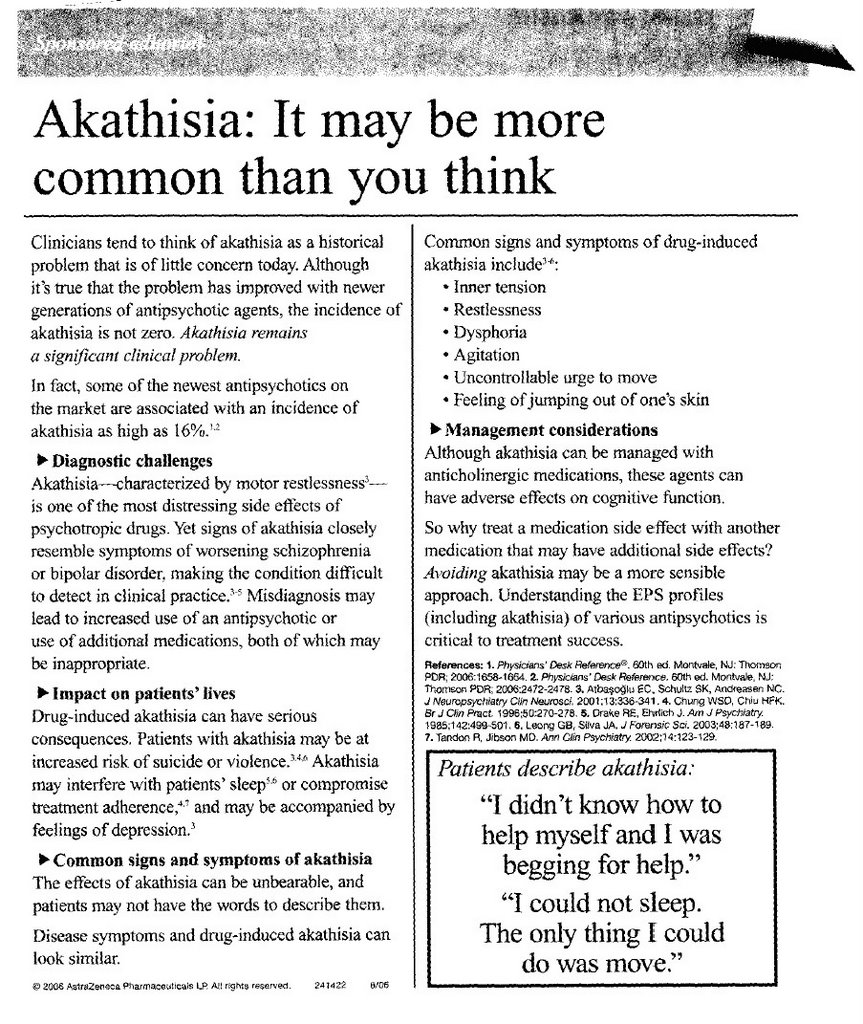
Stealth Marketing. It may be more common than you think.
You like?

Thursday, February 01, 2007

Scouts: Seroquel Plays Better on Turf

According to Pharmalot, AstraZeneca's antipsychotic (and, perhaps, anti-everything else) Seroquel may be moving towards being astroturfed, via the National Alliance for the Mentally Ill.

NAMI's press release on the topic states

The National Alliance on Mental Illness (NAMI) will significantly expand its support group program for people with mental illnesses to all 50 states and Puerto Rico by 2009, thanks to an exclusive multi-year partnership with AstraZeneca, LP.

Hey, maybe AZ is just doling out goodwill money, but I tend to think this is the following
a) Great PR for AZ
b) A chance to get more people introduced to the wonders of Seroquel

I suppose we'll find out. More on astroturfing here.

Hat tip to PharmaGossip.

Seroxat (Paxil) Can Make People Suicidal?

… not by the hair of my chinny chin chin, sayeth Martin Keller, or so it would appear.

Not sure how I neglected to mention this in a prior post, but here goes: Keller (on video), was asked about a study which showed placebo was superior to paroxetine (Seroxat or Paxil). In response, Keller, while smiling, reached out and stroked the reporter under the chin. I don’t really know what that gesture meant, but it struck me (and some individuals who have emailed me about it) as pretty strange.

Speaking Truth

A prior post regarding the Paxil/Seroxat for adolescent depression debacle focused on an academic who seemed to have acted as a huckster for GlaxoSmithKline. He could have been naïve or he could have been on the take or some combination thereof. In any case, his behavior does not reflect well on the academic research community.

However, I want to take this opportunity to publicly give praise where it is due. Dr. David Healy was also interviewed on Panorama and I will provide two quotes (according to my transcription of the episode), the nature of which few in academia have the guts to say publicly.

If you heard the experts talk, they all said the drug was extremely safe and very effctive. We were all hoodwinked, misled, duped. They use these clinical trials which appear to be evidence and they aren’t – they’re adverts.

[Later in the broadcast]

…people who are ill generally have been deeply betrayed by the whole process, deeply betrayed by the pharmaceutical companies and by all the experts that have been willing to actually lend their names to the process.

I give Healy oodles of credit for making the above statements. Making much softer statements than those above ended up costing him a lucrative academic job in the past. It is a sad state of affairs when people such as myself feel the need to write anonymously when questioning the interface between marketing, academia, and science. This makes the public statements by Healy all the more commendable.

Warning: Will Likely Cause Painful Laughter

Pharma Giles is at it again. Here’s the teaser:

An investigative report has recently been broadcast on national television, criticising Phoni for its off-label promotion of Saloadatat, its frontline treatment for tennis elbow. The documentary has linked Saloadatat to a massive increase in nervous breakdowns, suicides and psychosis amongst the racquet-sports community. Within his secret underground security bunker, hidden deep beneath the company headquarters in Dry Prong, Louisiana, Phoni CEO John Sinister has called an emergency board meeting...
What follows will cause uproarious laughter in 90% of people. Check it out here.